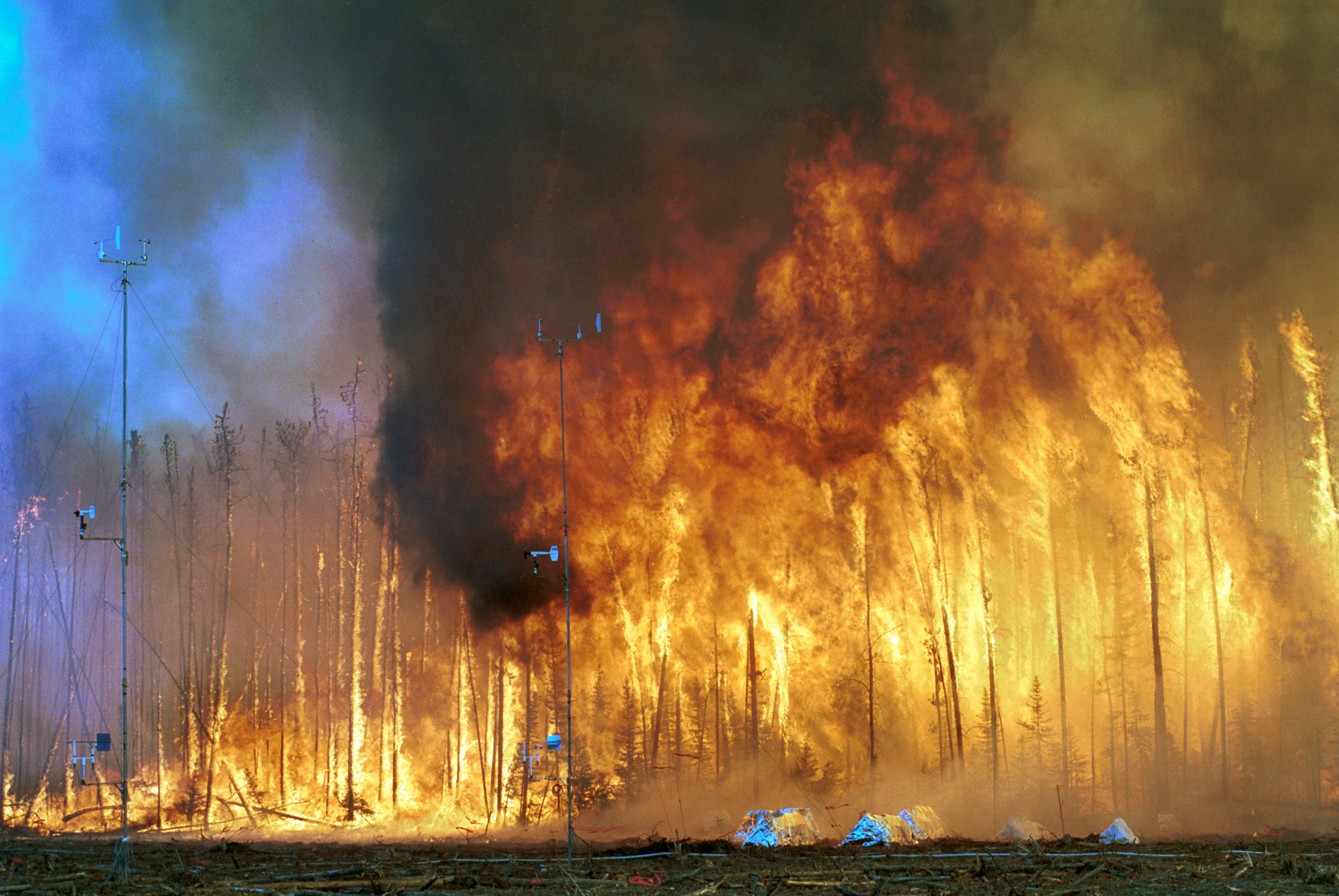
Wildfire risk for forested cabin properties in Canada has shifted from a seasonal footnote to a central design consideration. The 2016 Fort McMurray fire, the 2017 and 2023 BC wildfire seasons, and the ongoing pattern of extended fire weather across the boreal zone have forced a reassessment of how structures are sited, built, and maintained within the forest.
The Canadian Institute for Forest Engineering, Natural Resources Canada, and provincial forestry agencies have developed standards and guidelines specifically for the wildland-urban interface — the contested edge between developed land and forest. Understanding those standards is the starting point for any new cabin build or renovation on forested property.
The Concept of Defensible Space
Defensible space refers to the managed zone around a structure where vegetation has been reduced, modified, or replaced to slow fire spread and give firefighters a tenable area from which to work. FireSmart Canada, a national program administered through Partners in Protection, divides this zone into three concentric areas:
- Zone 1 (0–10 metres from the structure): The highest-priority zone. All combustible material should be removed or significantly reduced. This includes dead wood, bark mulch, dense shrubs, and propane tanks. Trees retained in this zone should be individual specimens, not continuous canopy, and their lower branches should be limbed to a height of at least two metres.
- Zone 2 (10–30 metres): Spacing between trees and shrubs is the primary management tool here. FireSmart guidelines recommend that the crowns of adjacent trees in Zone 2 be separated by at least three metres — enough to break horizontal fire spread. Dead material on the ground should be cleared annually.
- Zone 3 (30–100 metres, where property allows): Lower-intensity management. The objective is to reduce fire intensity approaching the structure, not to eliminate all vegetation. Selective removal of ladder fuels — vegetation that connects ground fire to crown fire — is the main activity in this zone.
Many existing cabin properties in Canada, particularly those built or purchased before 2010, do not meet these thresholds. Retroactive implementation requires a combination of selective tree removal, limbing, and removal of organic debris, often over several seasons.
Roof Material and Ember Resistance
Embers — burning fragments carried by wind ahead of an active fire front — are responsible for the majority of cabin ignitions during wildfire events. Research from the National Research Council of Canada and the Insurance Bureau of Canada indicates that ember intrusion through vents, gaps in fascia, and under aging roofing materials is the most common ignition pathway.
The National Building Code of Canada (Part 3 and Part 9) sets minimum fire resistance ratings for roofing assemblies, but these ratings are for conventional fire scenarios, not ember exposure. Provincial fire codes in BC, Alberta, and Ontario have added supplementary requirements for the wildland-urban interface, including:
- Class A fire-rated roofing materials (asphalt fiberglass shingles rated Class A, concrete tile, or metal roofing)
- Closed soffit systems — open-soffit construction creates a direct ember pathway into the roof assembly
- 1/16-inch or smaller mesh on all vent openings, including ridge vents, soffits, and foundation vents
- Non-combustible gutter guards, or aluminum gutters kept clear of leaf debris
Wood shakes and cedar shingles — common on older Canadian cabins — are particularly vulnerable. An unrated wood shake roof can ignite from ember contact within minutes. Replacement is the most straightforward risk reduction measure for structures where the roofing predates current standards.
Siding and Exterior Cladding
Log and timber-frame construction is associated with forest cabin aesthetics across Canada, but exposed log siding is more fire-resistant than many composite or vinyl cladding products. The density of log walls slows ignition significantly. The vulnerability in log construction is usually at the connections: window frames, door surrounds, and deck attachments made from dimensional lumber or composite materials.
Deck structures represent a disproportionate fire risk. An attached wood deck provides a combustion platform adjacent to the building envelope. FireSmart Canada recommends enclosing the space under any deck within 10 metres of the structure, using non-combustible materials for decking surfaces where feasible, and keeping the area beneath decks clear of stored materials and debris.
Access Road Requirements for Emergency Response
Fire suppression at a remote forest property depends on whether fire apparatus can reach the site. BC's Interface Fire Regulations (under the Wildfire Act) and similar provincial frameworks set minimum standards for access roads serving forested properties:
- Minimum travelled surface width of 6 metres
- Vertical clearance of at least 4.5 metres (to accommodate tanker trucks)
- Turn-around or passing areas at intervals of no more than 300 metres on single-lane roads
- Road grade not exceeding 12% for sustained sections, with steeper pitches limited to short stretches
Many private access roads on forested cabin properties fall below these standards. A road that is passable by a pickup truck in summer may be impassable to a fire tanker — particularly on steep grades, after seasonal frost heave, or when the road surface has not been maintained with a proper aggregate base.
Insurance Implications
Canadian property insurers have become increasingly selective about coverage for structures within the wildland-urban interface. Several major insurers withdrew from or limited coverage in high-risk BC and Alberta fire zones following the 2023 season. Properties that have completed a FireSmart Canada Home Assessment — a documented inspection of vegetation management, building materials, and access conditions — are more likely to retain coverage and may qualify for reduced premiums through participating insurers.
The FireSmart Canada website maintains a list of accredited local assessors by province. Assessments are voluntary but provide a documented baseline that is useful both for insurance discussions and for prioritizing physical improvements over multiple seasons.
Seasonal Preparation
Even properties that meet structural and defensible space standards require annual preparation before fire season. In most of BC and Alberta, this window is April through May — before the critical fire weather period and before soil disturbance triggers nesting bird restrictions in some areas. Routine annual preparation includes:
- Removing accumulated leaf and needle debris from gutters, rooftop valleys, and the deck surface
- Inspecting and replacing vent screens that have corroded, bent, or accumulated debris
- Clearing the first metre around the building perimeter of any accumulated organic material
- Checking propane and fuel tank clearances and connections
- Reviewing the access road for winter heave damage and grading any soft sections
For further reference on FireSmart standards: FireSmart Canada and Natural Resources Canada — Forest Fires.